Academia
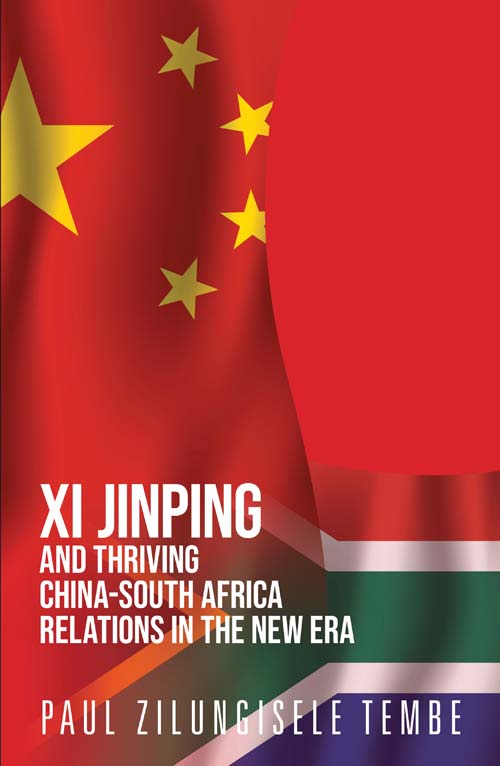
Xi Jinping and Thriving China
South Africa Relations in the New Era
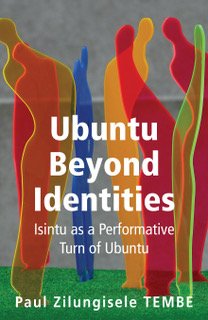
Isintu as a Performative Turn of Ubuntu
by Professor Paul Zilungisele TEMBE
Looking for this title? Contact us and we’ll let you know if copies become available.
Endorsements
Ubuntu Beyond Identities is a comparative study of value systems in South Africa, China and Sweden, based on the personal observations of the author. The narrative quizzes possible solutions for developmental problems in South Africa using examples from China and Sweden as benchmarks. In an attempt to find a viable cross-cultural communication strategy suitable for communitarian societies, as in Africa-China cooperation, it goes beyond the customary version of ubuntu informed by the histories of contacts with the Western world, mostly written by Westerners. This book also attempts to connect China and South Africa at a cultural level using salient cultural constructs seen to impact the peoples of both nations in their everyday practices.
This work is a valuable contribution to research in value systems and development problems in general and China-South Africa relations in particular. I highly recommend this book to teachers and students of South African affairs and China-South Africa relations.
— DrAbdulaziz Y. Lodhi, Emeritus Professor, Uppsala University, Sweden
I humbly wish to express a deep regret that this book wasn’t available to us as the African National Congress (ANC) and the Mass Democratic Movement (MDM) were preparing for governance in a free South Africa. This invaluable compendium scrutinised closely and, alongside the Freedom Charter, would have and still can form a substantial blueprint for a future away from both the hostile past and moribund present. The two documents would have given our government a clear and better vision to unambiguously prioritising first and foremost strategies, policies and actions inwardly directed in favour of the most dehumanised and severely brutalised victims, the Black majority.
— Ambassador LindiweMabuza
Twenty-five years after the delivery of political democracy, the Edenic projects of nonracialism and the Rainbow Nation have failed because there was no fuller appreciation of what is meant by ubuntu. The version of ubuntu that was used and applied immediately after 1994 should have focused first on re-empowering the Black social groups. Instead, attempts to rebuild all races and forge social cohesion were made through the defunct Truth and Reconciliation Commission and short-term sporting codes like the 1995 Rugby World Cup, the 1996 Africa Cup of Nations and the 2010 FIFA World Cup. That understanding of ubuntu was a sanitised quick fix that could not undo centuries of dehumanisation, as characterised by apartheid.
Ubuntu Beyond Identities presents the true meaning of ubuntu, which has its roots in communitarian societies and their value systems, and redefines it within the premises of lived African experiences. As part of an international benchmark on the viability of local value systems aimed at a fulfilled citizenry, the book compares ubuntu to its counterparts of Jantelagen in Sweden and Confucianism in China.
The book emphasises that society is a lived space beyond the monetary capital production and seeks to empower South Africans with conceptual and practical tools to become dignified and fulfilled citizens. It explains the notions of ownership and examines two types: the private, which promotes individual profits aimed at a zero-sum game, and the primordial, which is meant to deliver to the communal table of society for the benefit of an entire nation.
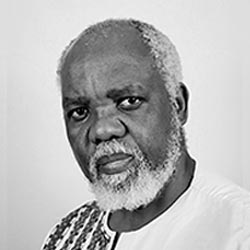 Professor Paul Zilungisele TEMBE
Professor Paul Zilungisele TEMBE (谭哲理) is a Senior Research Fellow at the Thabo Mbeki African School of Public and International Affairs and an Associate Professor at the Institute of African Studies, Zhejiang Normal University, China. He was recently appointed as Visiting Associate Professor at the China Foreign Affairs University in Beijing.
TEMBE has an MA in Kiswahili Studies from Uppsala University and a Ph.D. in Chinese Studies from the Chinese University of Hong Kong. He has researched and taught at, inter alia, the Chinese University of Hong Kong, Stellenbosch University, Uppsala University, the University of South Africa and Rhodes University. His current study looks at the geopolitical paradigm shifts towards a new world order titled ‘Fear of Equality – Instilling Meritocracy’.
He is professionally fluent in English, Mandarin, Portuguese, Kiswahili, Swedish, Sesotho, Xitsonga and isiZulu.
Academia
South Africa Relations in the New Era
Academia
Through South African Eyes
Academia
Opinion and Analysis
Academia
An actor-orientated analysis
Academia
Perspectives on African renewal